Packaging Solutions for Businesses: What Works Best with Franking Machines?
Match the packaging to the franking machine: the right envelope, padded mailer, mailing bag or box keeps postage low, protects the contents and still lets you frank it.
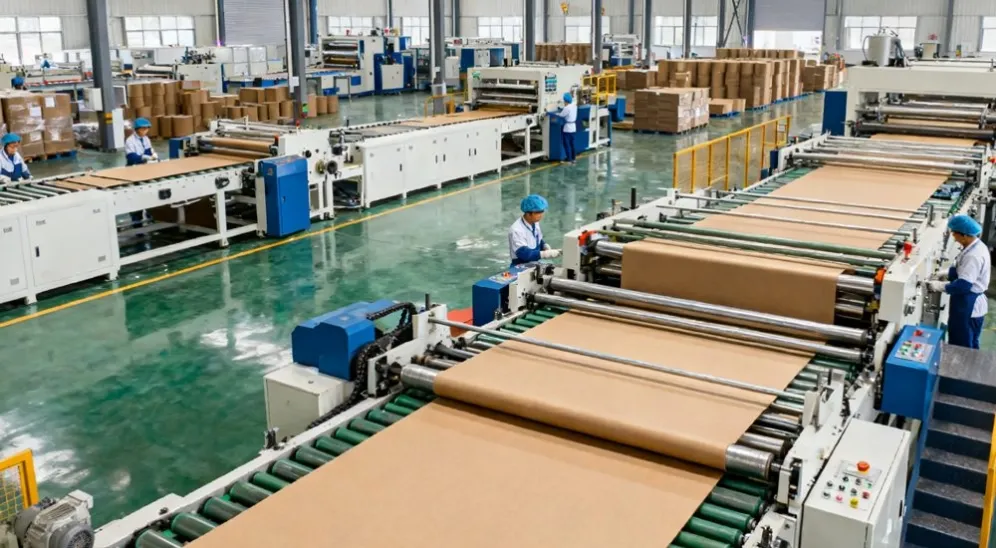
The best packaging for a business with a franking machine is the packaging you can frank — or frank a label for — without slowing the mailroom down. A franking machine prints the postage impression directly onto the envelope or onto a label, replacing stamps and letting you pay the franked rate. That only saves time and money when the packaging you choose fits the machine, fits the postal size band and protects what is inside.
How franking changes the packaging choice
A franking machine is a simple idea with a practical consequence. Instead of buying stamps and sticking one on each item, you print the postage impression — the frank — directly onto the envelope or box, or onto a label that you apply to the item. Businesses use it because franked mail is sent at a lower rate than stamped mail, and because a franking machine can handle a large number of items in a short time. The catch is that not every pack can be franked directly. A smooth envelope can go through and be franked. A thick, lumpy or flexible pack often cannot, and then you frank a label and apply it instead. So the packaging decision is really two decisions: what protects the contents, and how will the postage get onto the outside?
Business envelopes
For plain paper mail, the answer is the business envelope. Business envelopes are used for letters, invoices and mailshots, and they come in gummed and self-seal forms. They are the natural fit for a franking machine because they are flat, smooth and easy to frank directly. A business sending between one and one hundred envelopes a day can frank them quickly and get the franked rate without any extra handling. The buying point is to size the envelope to the contents and the postal size band: an envelope that is too large for a single sheet costs more to post than the same letter in the right size. For a business that mostly sends letters and documents, business envelopes are the cheapest and simplest packaging to run with a franking machine.
Padded envelopes
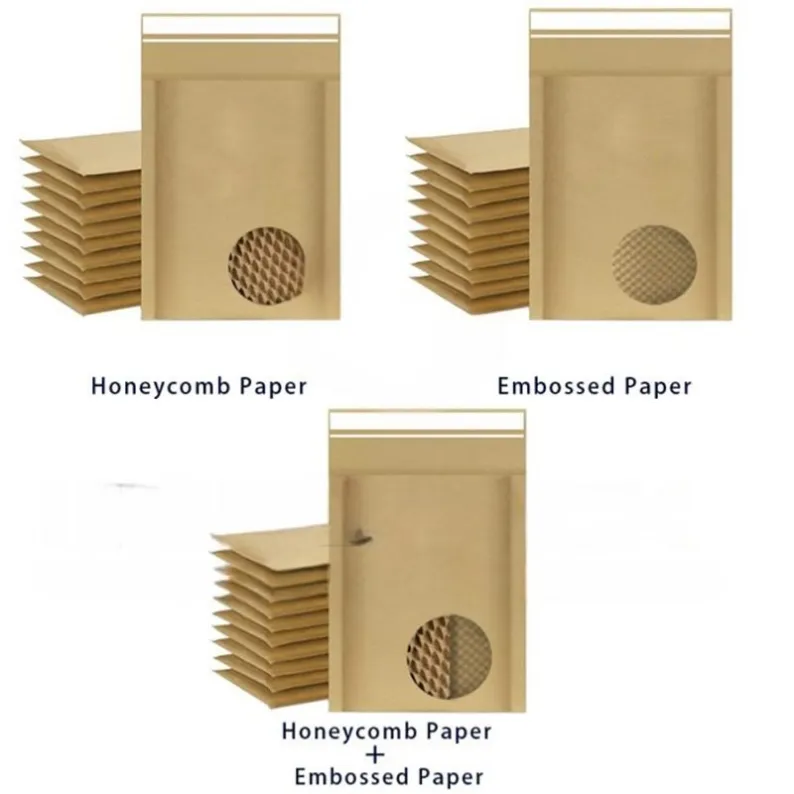
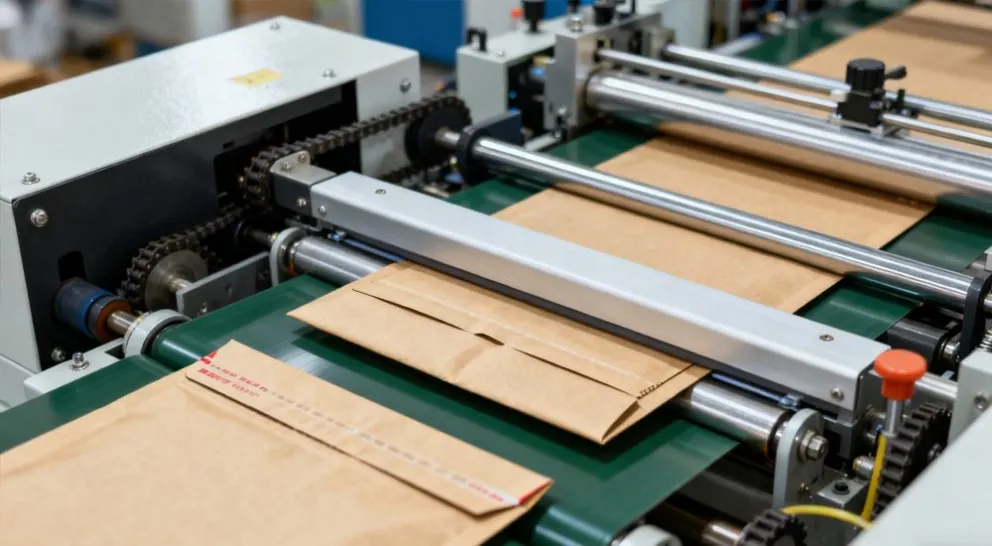
Padded envelopes are the step up when the contents need cushioning. They are bubble-lined envelopes, and they work for electronics, jewellery and documents that would be damaged in a plain envelope. They come in gold and white as standard, and there are also honeycomb paper and other paper-based padded envelopes for businesses that want a plastic-free option. The key point for franking is that a padded envelope is not usually franked directly, because the bubble lining makes the surface uneven. Instead, you frank a label and apply it to the padded envelope, and you still get the franked rate. So padded envelopes cost a little more handling time than a plain envelope, but they protect items that a plain envelope cannot, and they are a better choice than a box for anything that is flat or nearly flat and needs cushioning.
Mailing bags
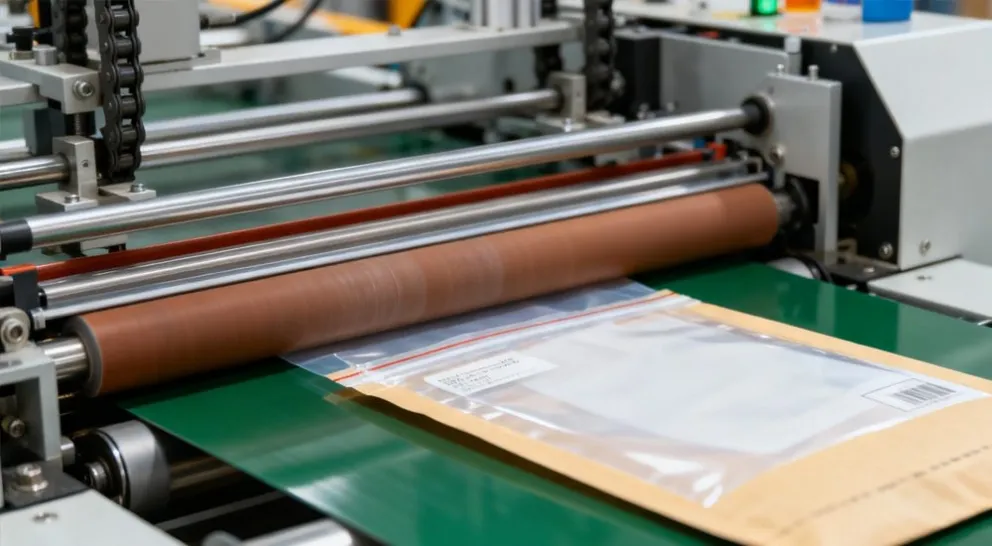
Mailing bags are the right choice for lightweight items that are not delicate: clothing, soft goods and other unbreakable items. They are lightweight, durable and water-resistant, and they add very little weight to the parcel, which keeps postage down. Polythene mailing bags are the standard choice, and heavy-duty mailing bags are available for larger and heavier items. For businesses that want a more sustainable option, paper mailing bags and sugar cane mailing bags are also available. Mailing bags cannot be franked directly, because the material is flexible and the surface is not flat enough for the franking machine. The routine is the same as for padded envelopes: frank a label and apply it to the bag. That is a small extra step, but the low weight and low cost of a mailing bag usually make it worthwhile for soft goods.
Cardboard envelopes and boxes
Cardboard envelopes and boxes cover the two remaining cases: flat items that must stay flat, and bulky or fragile items that need a rigid pack. Cardboard envelopes are used for documents, certificates and photos that need to arrive crease-free, and they are recyclable. They include corrugated pocket envelopes, which have a pocket for the item, and capacity book mailers, which expand to take thicker items. Pillow envelopes are a luxury option for smaller, lighter items that need a little protection and a smart presentation. Boxes are for bulkier, fragile, multiple or larger items. They are usually corrugated cardboard, and they can be used with bubble wrap, tape and warning labels for fragile contents. They are also recyclable. Boxes are sized for postal size bands such as Large Letter, Small Parcel and Medium Parcel, and they come in brown and white, in single and double walled forms, and as telescopic boxes that adjust to the contents. Like mailing bags, boxes are not franked directly: you frank a label and apply it to the box. The buying point is to choose the smallest box that protects the contents, because postage is charged by size and weight, and a box that is too large costs more to send and needs more filling.
Make the franking impression work for your brand
Franking does more than pay the postage. The franking impression can include a custom logo, a return address and a slogan, so every item that leaves the mailroom carries your branding. The same idea applies to the packaging itself: custom printed boxes, mailers, bags and envelopes let you put your logo directly on the packaging, so the parcel is recognisable before it is even opened. For a business that sends mail regularly, that is a low-cost way to look professional and consistent. It also helps with returns, because a clear return address on the franking impression makes it easy for undelivered mail to come back to you.
Choosing in practice
In practice, the choice comes down to five questions. What is inside, and how much protection does it need? A letter needs an envelope; electronics need a padded envelope; soft goods need a mailing bag; a fragile or bulky item needs a box. How much does it weigh, and which postal size band does it fall into? The smallest pack that protects the contents is usually the cheapest to send. Can it be franked directly, or will you frank a label? Envelopes can be franked directly; padded envelopes, mailing bags and boxes need a label. What is the packaging made of, and does it fit your sustainability policy? Paper and sugar cane options are available for mailers and bags, and cardboard envelopes and boxes are recyclable. And does the pack carry your brand? A custom franking impression and custom printed packaging are both cheap ways to do that. Answer those five questions for the items you send most often, and the right packaging will be clear.
The right packaging for a franking machine is the one that protects the contents, fits the postal size band and can be franked directly or with a label, without slowing the mailroom down. For letters and documents, that is a business envelope. For flat items that need cushioning, it is a padded envelope. For soft, unbreakable goods, it is a mailing bag. For flat items that must stay flat, it is a cardboard envelope, and for bulky or fragile items, it is a box. Compare mailer and envelope machines to see the paper mailer lines that make the envelopes and mailers in this guide, and contact us to discuss the items you send, how many you send each day and how fragile they are.