Translucent Power at Scale: The Glassine Paper Mailer Machine Playbook
Glassine is a translucent, grease-resistant paper that makes a mailer look premium and recycle with paper. This playbook covers the machine, the material and the buying checks.
A glassine paper mailer machine makes translucent, grease-resistant paper mailers at the speed an e-commerce operation needs. The mailer looks premium, it shows the product inside, it resists grease without added chemicals, and it recycles with paper. That combination — look, compliance and speed — is why glassine has moved from a niche material to a serious choice for apparel, stationery and book sellers. This playbook explains the material, the machine, the quality checks, and the buying decisions behind a glassine line.
What Glassine Is
Glassine is a super-calendered paper: paper pressed until it is smooth, dense and translucent. It is naturally grease-resistant, so it needs no added coating to resist oil and grease. It is acid-free and pH-neutral, which is why it has long been used to protect photographs, stamps and other items that must not yellow or degrade. It is recyclable in the paper stream, and it is biodegradable under the right conditions. And because its grease resistance is inherent to the paper, it is PFAS-free by nature — an important point as regulators restrict fluorinated chemicals in packaging.
For a mailer, those properties add up to a simple offer: a bag that looks like a premium product, protects what is inside from grease, and can be recycled by the customer in the paper bin. That is the material story a buyer should be able to tell, and to prove, before choosing a machine.
Why Glassine Mailers Sell
Glassine mailers sell because of how they look. The translucency lets the product show through, so the mailer itself becomes part of the presentation. The smooth surface prints cleanly, so branding looks sharp. And the feel is different from kraft or plastic: smooth, quiet and premium. For apparel brands, stationery sellers and book shippers, that matters: the mailer is the first thing the customer touches, and glassine makes it feel considered. The mailer also answers the sustainability question without a lecture: it is paper, it recycles with paper, and it contains no plastic film.
The Machine: What It Does
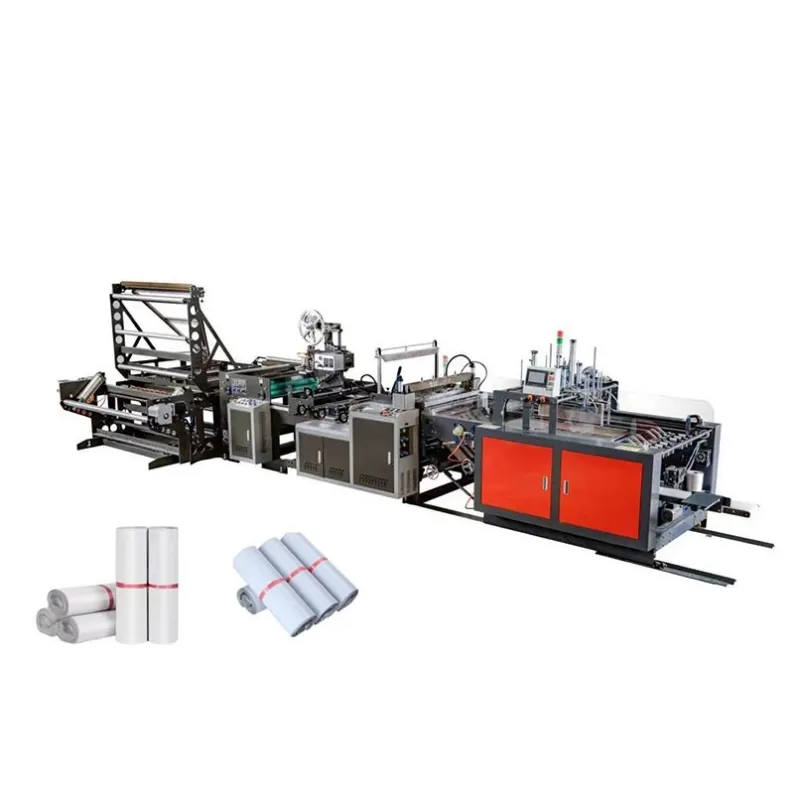
A glassine paper mailer machine turns a roll of glassine paper into finished mailers. The main stages are unwinding, forming, sealing, cutting and stacking. The features that separate a good machine from a basic one are control and checking. A servo-driven unwind keeps the paper tension steady, so the forming stays accurate. Closed-loop sealing controls temperature and pressure, so seals are consistent across a run. Recipe locks store the settings for each product, so a changeover returns to the same settings every time — and that is what keeps overall equipment effectiveness, or OEE, stable. Forming shoes and plows shape the mailer; adhesive and tear-tape units add the closure and the easy-open strip; vision systems check seams and print; checkweighers confirm each mailer; and batch IDs and logs give traceability for every run.
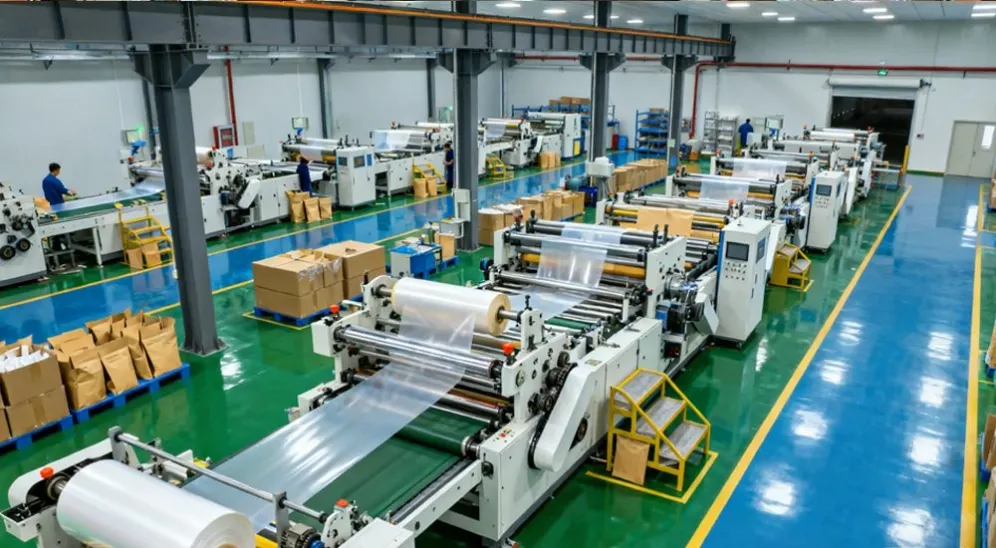
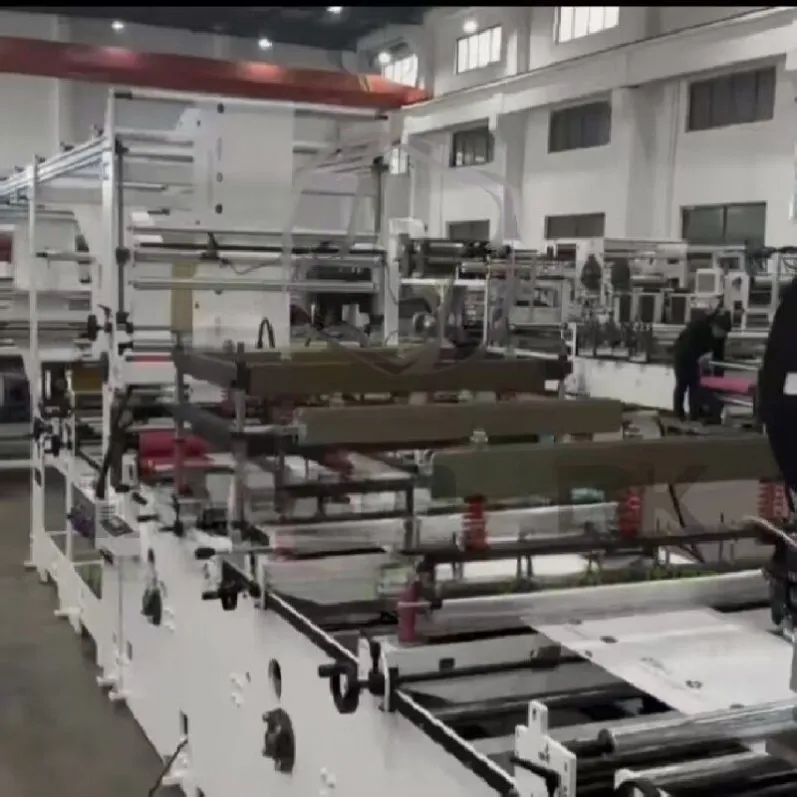
A glassine paper mailer machine in the factory, shown above, is a full line: unwind, forming, sealing and stacking in one sequence. When you inspect a machine, look at the whole line, not only the forming section — the unwind and the stacking decide whether the line runs steadily at speed.
Glassine vs Kraft vs Plastic
Glassine is not the only mailer material. The comparison below shows where it wins, and where kraft or plastic still has a place.
| Material | Look | Grease resistance | Recycling |
|---|---|---|---|
| Glassine | Translucent, premium | Inherent, PFAS-free | Paper stream |
| Kraft | Natural, rustic | Limited | Paper stream |
| Plastic | Clear, slick | Good | Film stream |
Kraft wins where a natural, rustic look is wanted and grease is not an issue. Plastic wins where a fully waterproof, clear bag is needed. Glassine wins where the mailer must look premium, resist grease and recycle with paper — which is a large share of apparel, stationery and book shipments.
Quality Control That Matters
Glassine is a demanding material: it is smooth, it is thin, and it shows every defect. The quality checks that matter most are seam strength, print registration, tear-tape placement and mailer weight. Vision systems check the seam and the print on every mailer, and a checkweigher catches mailers that are missing a tape or a seal. Batch IDs and logs matter too: if a customer reports a problem, you should be able to trace it to a batch, a paper roll and a machine setting. On acceptance, test with your own paper and your own artwork — a machine that runs well on the supplier's paper may behave differently on yours.
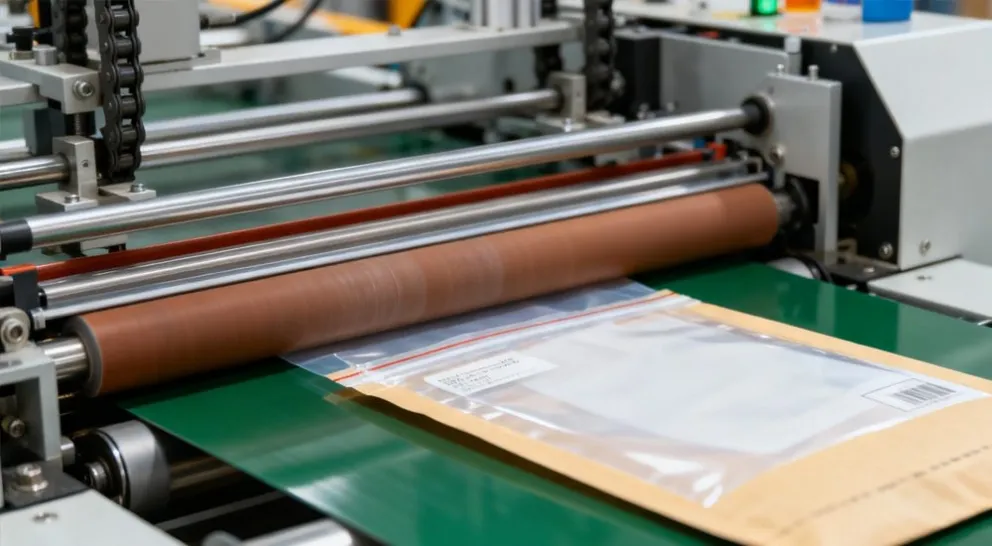
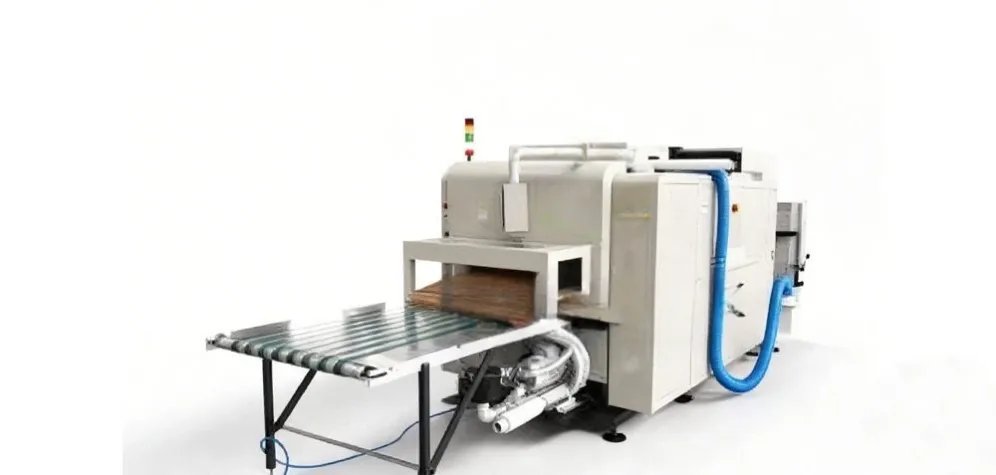
The cutting and sealing section, shown above in close-up, is where mailer quality is made or lost. Sealing temperature, pressure and dwell time must be set for the specific glassine paper you use, and they must be locked in a recipe so they do not drift between shifts.
Running It at Scale
At scale, the machine is only part of the line. Companion modules — folding, inserting and labelling — decide whether the mailers can be filled and dispatched at the same speed they are made. Changeover time decides how many different mailer sizes a day can be run. Recipe locks and stable OEE decide whether the second shift produces the same mailers as the first. The guide frames payback in the 12–24 month range when OEE is stable, with the saving coming from lower damage, lower dimensional weight and fewer chargebacks — not from the machine price alone. That framing is the right way to judge the investment: the machine pays back through the parcels it ships, not through the specification sheet.
Buying Checklist
- Check the paper specification. Confirm the grammage, translucency and grease resistance of the glassine you will use, and that the machine is set up for it.
- Test the sealing window. Every glassine paper has a sealing window of temperature and pressure. Ask the supplier to demonstrate it with your paper.
- Confirm vision and quality checks. Seam and print vision, tear-tape checks and checkweighing should be part of the line, not an extra.
- Measure changeover time. If you run many sizes, changeover time matters as much as top speed.
- Ask about service and spares. A line that stops for a part is a line that misses shipments. Confirm what is stocked and how fast it arrives.
- Run a trial with your paper and artwork. A trial run is the only way to know the machine will produce the mailers your customers will actually receive.
Frequently Asked Questions
Is glassine recyclable? Yes. Glassine is paper, and it recycles in the paper stream. It is also biodegradable under the right conditions, and it is PFAS-free by nature.
Can glassine replace kraft or plastic mailers? For many products it can, especially apparel, stationery and books. Where full waterproofing is needed, plastic may still be the right choice.
Talk to Hangjia Machinery
If you want a mailer that looks premium, resists grease and recycles with paper, glassine is the material to discuss. Browse our Mailer and Envelope Machines, then contact us to discuss the glassine paper you use, the mailer sizes you need, and the volumes you plan to produce.